It is the question every first-time buyer asks: "How many acoustic panels do I actually need?" Buy too few and the room still echoes. Buy too many and you have wasted money. The good news is that you do not need to be an audio engineer to get this right — you just need a simple method.
At Global Acoustic Solutions, here is the exact approach we use to help customers plan a room.
The short answer
For most rooms, treating 15% to 30% of the total wall and ceiling area gives excellent results. You almost never need to cover every surface — in fact, covering too much can make a room sound dull and lifeless.
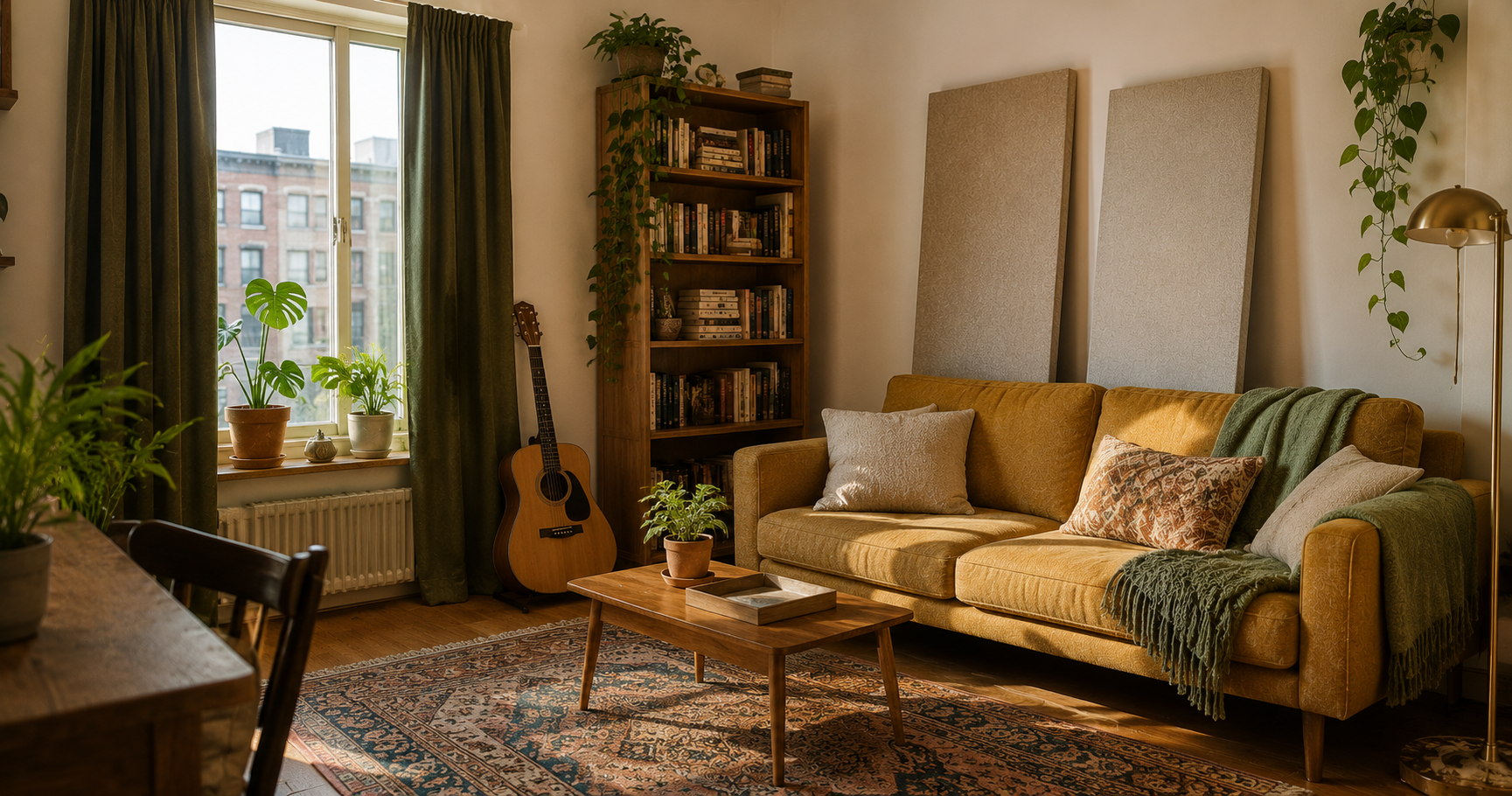
- Light treatment (around 15%) — offices, living rooms, meeting rooms where you just want less echo.
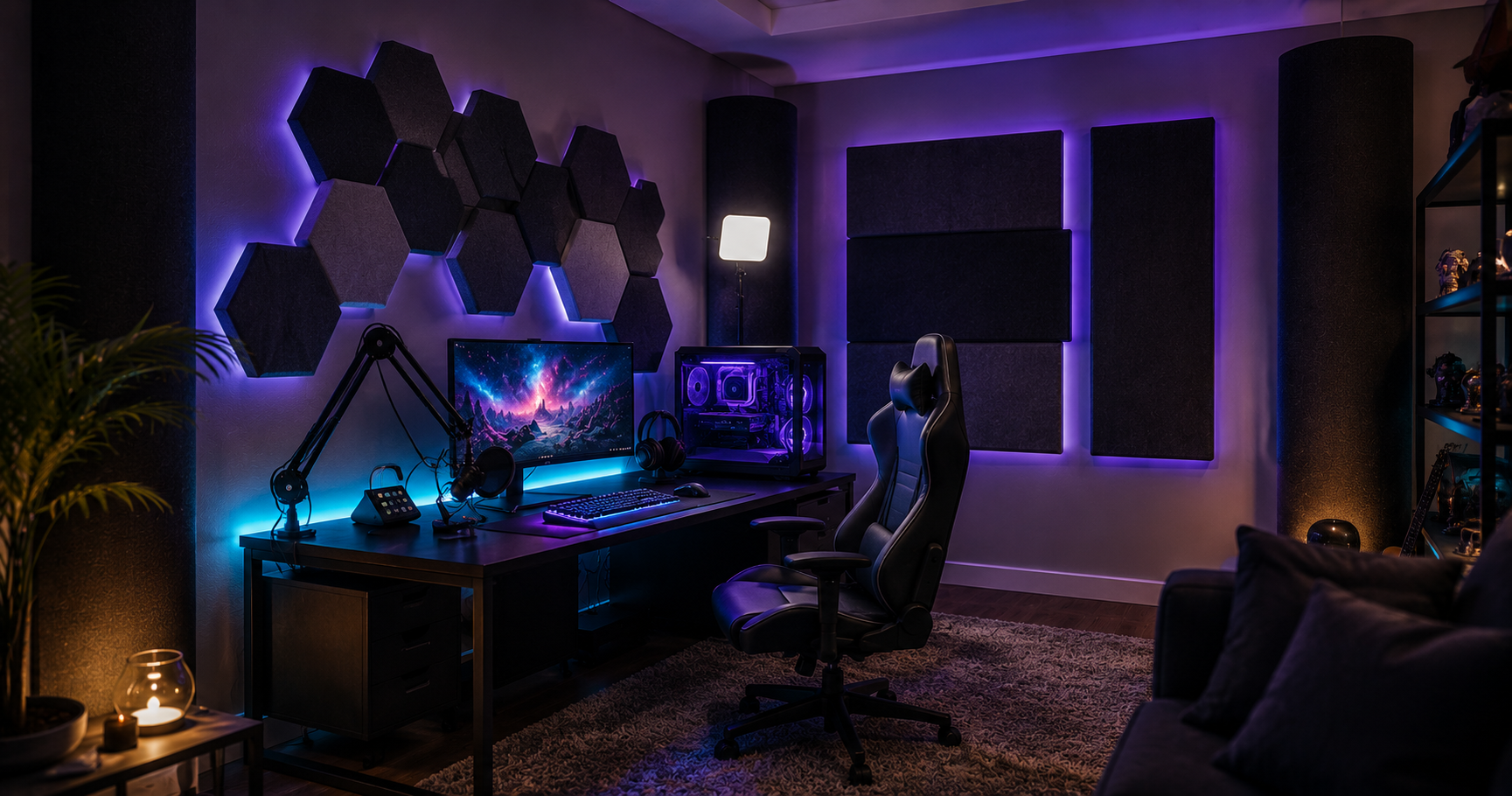
- Medium treatment (around 20-25%) — home theatres, podcast setups, streaming rooms.
- Heavier treatment (around 30%) — recording studios and rooms where sound quality is critical.
How to work it out, step by step
Grab a measuring tape and follow these three steps:
- Step 1 — Measure the room. Note the length, width and height in feet.
- Step 2 — Find the treatable area. Add up the wall area (length × height for each wall) plus the ceiling. This is your total surface area.
- Step 3 — Take 20%. Multiply the total by 0.20 for a solid, all-round result. That number is roughly how much panel coverage you need in square feet.
A quick real-world example
Let's say you have a small home studio that is 12 ft long, 10 ft wide and 9 ft high:
- The four walls come to about 396 sq ft, and the ceiling adds 120 sq ft — roughly 516 sq ft total.
- 20% of that is about 103 sq ft of coverage.
- If each panel covers around 4 sq ft, that works out to roughly 25 panels.
You do not have to be exact — this is a starting point, and you can always add a few more later if the room still feels live.
Placement matters more than quantity
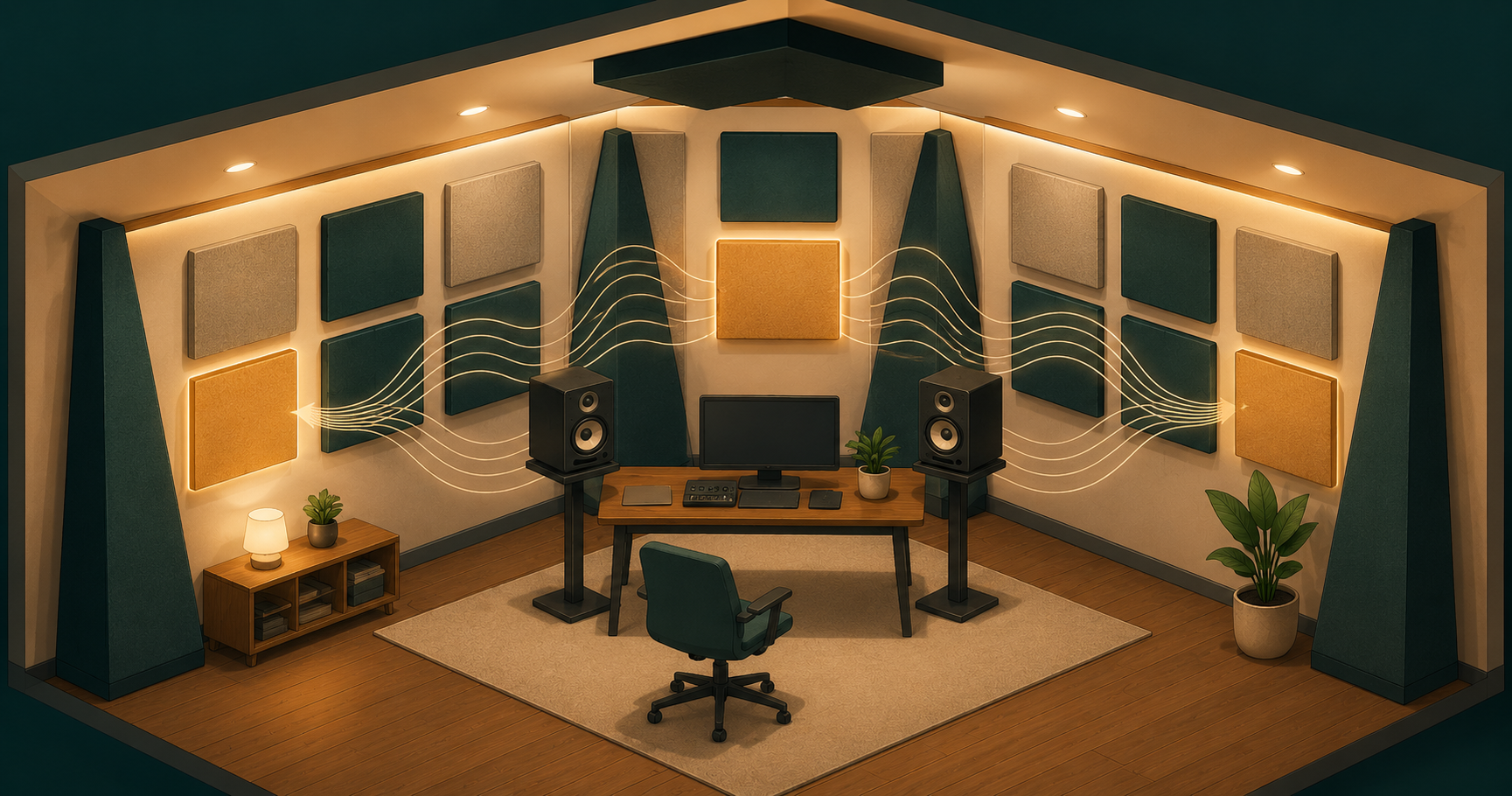
Where you put the panels is just as important as how many you buy. The most effective spots are the first reflection points — the places on the walls where sound bounces from your speakers straight to your ears. Treating these first gives you the biggest improvement for the fewest panels.
A simple trick: have someone slide a small mirror along the side wall while you sit in your listening position. Wherever you can see a speaker in the mirror, that is a first reflection point — and a perfect place for a panel.
Don't forget the corners
Panels handle mid and high frequencies well, but bass builds up in the corners of a room. If your room feels boomy or muddy, no amount of flat panels will fully fix it — you need bass traps in the corners. For studios and home theatres, adding a few bass traps often makes a bigger difference than adding more wall panels.
The easy way
If maths is not your thing, don't worry — that is what we are here for. Tell us your room size and what you use it for, and we will suggest a panel plan that fits your space and budget. You can also ask Aria, our store assistant, for a quick estimate right on the site.
Ready to treat your room? Browse our acoustic panels and bass traps and get the clean, clear sound you are after.